

The kit, piece by piece
The tools don't make the drink, but they decide whether it comes out the same every time. Each piece with its types, its materials, and the note that takes it past the surface.

Shaker
Coctelera
Shakes: chills, dilutes and aerates in one go. Anything with citrus, egg white or dairy is shaken, never stirred.
Types
- Boston — Two metal tins. The pro standard: capacity, speed and a clean seal.
- Cobbler — Three pieces with a built-in strainer. The friendliest to start at home.
- Parisian — Two pieces, no built-in strainer. Elegant, in between the two.
- Material
- Stainless steel; weighted tins chill faster. The all-metal Boston is the 2026 pro pick (it won't crack like a pint glass).
The noteShake hard 10–12 s, until the tin frosts over. If the cold doesn't bite a little, it isn't ready.

Jigger
Measure
The cocktail's precision. It measures spirits and modifiers so the balance repeats exactly, drink after drink.
Types
- Japanese — Slim hourglass with interior lines (¼ · ½). The most accurate.
- Bell — Wider and steadier in the hand; the American classic.
- Stepped — A single cone with several interior marks.
- Material
- Stainless steel. The Japanese jigger with interior lines is the 2026 favourite for accuracy.
The noteIf you buy one, the Japanese 30/60 ml with lines. Fill to the brim, never by eye.

Bar spoon
Cucharilla
Stirs without aerating, layers over the back of it, and measures small amounts. The twisted stem guides the spin.
Types
- European — Teardrop or disc end; the disc is for layering.
- American — Red cap on the end; simple and cheap.
- Japanese — Weighted, with a counterweight or trident; the most controlled spin.
- Material
- Stainless steel. The weighted Japanese spoon almost spins itself between your fingers.
The noteStir along the wall of the glass, no bubbles, ≈30 s: it chills and dilutes at once.

Strainer
Colador
Holds back the ice and pulp as you pour. Each shape for a technique.
Types
- Hawthorne — Spring around the edge; for shaken drinks, sits in the tin.
- Julep — Perforated bowl; for stirred drinks, sits in the mixing glass.
- Fine — Conical mesh; the double strain that catches shards and pulp.
- Material
- Stainless steel.
The noteDouble strain = Hawthorne + fine. A must on anything shaken with citrus or egg.

Mixing glass
Vaso mezclador
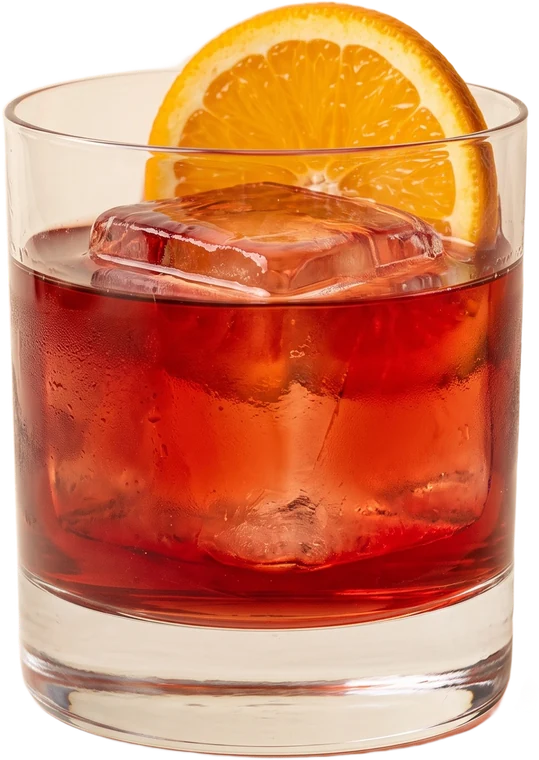
For stirred, citrus-free drinks — Negroni, Martini, Manhattan: stir with ice to the point, no aeration, then strain clean.
Types
- Yarai — Japanese cut-glass; heavy, steady and handsome on the bar.
- Pint — The Boston's glass; cheap and versatile.
- Seamless — Thick, even-walled, no seam.
- Material
- Thick glass: more mass, steadier temperature as you stir. Yarai is the fine-bar standard.
The noteChill the glass with ice before building: the drink starts cold.

Muddler
Macerador
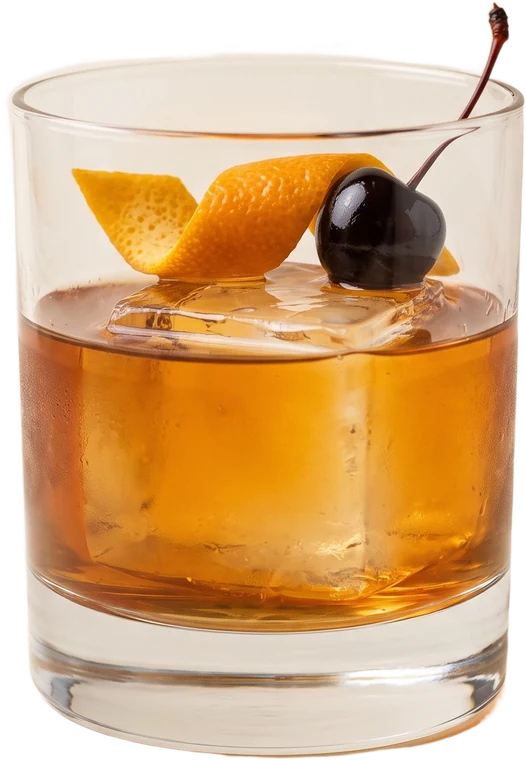
Breaks herbs, fruit and sugar to release their oil and juice — Mojito, Caipirinha, old-school Old Fashioned.
Types
- Wood — Unfinished, the traditional one; kind to herbs.
- Steel — Easy to clean, no flavour.
- Toothed nylon — Muddles harder; great for fruit and sugar.
- Material
- Unfinished wood is the classic; avoid varnished ones (they leach flavour).
The notePress and twist, don't pulverize: bruised mint releases bitter chlorophyll.

Peeler
Peeler & channel knife
Citrus peel: its essential oil is half a drink's aroma.
Types
- Y-peeler — Lifts a wide strip for the oil and a big twist.
- Channel knife — A fine thread of peel for the long spiral.
- Material
- Sharp stainless steel; the white pith is bitter — leave it behind.
The noteSqueeze the peel over the glass (skin-side down) to spray the oil before you garnish.

Citrus press
Exprimidor
Fresh-squeezed juice, always: it's the acid backbone of half the book.
Types
- Lever (elbow) — The Mexican press, colour-coded: green lime, yellow lemon, orange.
- Press — A big lever for volume.
- Material
- Aluminium or steel; the coating chips over time — no big deal.
The noteSqueeze to order: bottled citrus tastes flat within minutes.
- 2026 trend

Ice
The invisible ingredient
Ice is an ingredient, not filler: it chills and dilutes, and its shape decides how much of each.
Types
- Block / big cube — Little surface: chills without watering down. For drinks over ice.
- Sphere — Just as slow, more striking in the glass.
- Crushed — Lots of surface: dilutes fast. Juleps, tiki, swizzles.
- Material
- 2026 trend: clear ice by directional freezing (no bubbles, melts slowly). Sustainability note: traditional cutting wastes up to 70% of the water.
The noteOne big cube per glass for drinks on the rocks; crushed only where fast dilution helps.
- 2026 trend

Atomizer
Aromatic spray
Aroma without dilution: a mist of absinthe, bitters or citrus oil over the glass, right before serving.
Types
- Glass — Small, for a rinse or an aromatic veil.
- Pump — More reach for high-volume service.
- Material
- Glass with a fine pump; the mist spreads aroma without wetting.
The noteAn absinthe spray-rinse gives the Sazerac its soul without watering the glass.
One family, its variants
Where the craft gets fine: shakers, jiggers and strainers aren't one piece, they're a series. Here, each family with its shapes and who makes them best.
The shakers
Three ways to shake, one physics. You pick by hand and by service.

Cobbler
Three pieces with a built-in strainer. The friendliest to start on; the fine reference is Japan's Yukiwa.

Boston
One metal tin + glass (or two tins). The pro standard for capacity, speed and a clean seal.

Parisian
Two pieces, no strainer. Elegant, halfway between the cobbler and the Boston.
Cocktail Kingdom's weighted Koriko and Leopold tins are the pro standard; America's Test Kitchen crowns the Koriko for its balance in the hand.
The jiggers
Measuring is the difference between a drink that repeats and one that drifts.
Japanese
Slim hourglass with interior lines (¼ · ½). The most accurate — the pro standard.

Bell
Wider and steadier in the hand; the home favourite.

Angled
Read from above, no crouching. OXO opened this lane for beginners.
Japanese precision rules: Cocktail Kingdom's Japanese jigger is the bar reference. If you buy one, the 30/60 ml with interior lines.
The strainers
Each shape for a technique. And together, the double strain.
Hawthorne
Spring around the rim, for shaken drinks; sits in the tin.

Julep
Perforated bowl, for stirred drinks; sits in the mixing glass.

Fine
Conical mesh. The second strainer of the double strain: catches shards and pulp.
Double strain = Hawthorne + fine, non-negotiable on anything shaken with citrus or egg. The Koriko Hawthorne wins ATK's tests: its tense spring lets no pulp or mint through.
New techniques and avant-garde kit — clarification, carbonation, rotovap, designer ice — come next. This is the kit that holds it all up.
When the bar becomes a lab
Once the kit is second nature, the rest begins: the techniques redefining modern mixology, and the gear that makes them possible. They don't replace the classics — they extend them.

Clarification
GearMilk or agar · centrifuge
Modern mixology's signature move: strip out the solids to leave the drink crystal-clear and silky. Three routes — filtration, gelation (agar) and density (centrifuge).
Case Milk punch, Benjamin Franklin's favourite, revived. It's now the technique ruling high-end menus.

Carbonation
GearSiphon / carbonator · PET bottles
Fizz into almost any liquid — even fruit. Live highballs and bottled cocktails with their own sparkle, poured in an instant.
Case Side Hustle's (London) «For Pith's Sake»: rye, Calvados and green apple, carbonated in the bottle.

Cold distillation
GearRotary evaporator
Distils delicate aromas without heat breaking them: drop the pressure, drop the boiling point. Bespoke distillates and impossible aromas, with no oxidation.
Case Over 60% of the best bars use one. Dave Arnold put it on the map with «Liquid Intelligence» (2014); a basic rig runs about $3,000.

Fast infusion
GearSous-vide · vacuum · fat-washing
What took weeks, in hours: temperature-controlled infusions, vacuum maceration and fat-washing — washing a spirit with fat (bourbon and bacon, brown butter).
Case Tayer + Elementary (London) builds its menu on house ingredients: its own ferments and distillates.

Designer ice
GearDirectional freezing · Clinebell · molds
Clear ice isn't just looks: with no bubbles it melts slower and dilutes less. Hand-carved blocks, spheres, seals engraved into the ice.
Case A 2026 trend. The flip side is sustainability: traditional clear-ice production wastes a lot of water.

Smoke & aroma
GearSmoking gun · cloche
An aromatic layer that reaches the nose before the first sip: wood, hay, tea. Aroma is half of flavour, and here it's served on purpose.
Case The Penicillin, with its smoky nod, carried this idea of smoke to bars everywhere.

Liquid nitrogen
GearN₂ dewar · −196 °C
Freezes on contact: crisp garnishes, impossible textures and theatre at the bar. Precision and spectacle in equal measure.
Case A direct inheritance from molecular gastronomy — Booker and Dax, Dave Arnold's bar-laboratory.

Liquid precision
Gear0.01 g scale · pH meter
Mixology becomes exact recipe: acid adjustment (citric and malic), saline solution, batching at scale. Balance stops being a guess and becomes a number.
Case Controlled fermentation and vacuum infusions define 2026; Bacardi sums it up as «More Is More».